
Training
Progressive overload: a bench-press example in kg and lb
Progressive overload means gradually increasing a training challenge as you adapt. Adding repetitions before increasing weight is one practical way to do it.
Reps first, then weight
Choose an exercise, a repetition range and a consistent way to perform it. Keep the movement, range of motion and rest periods comparable. Then build repetitions within that range. When you can complete the upper end with the planned effort and good technique, consider a small increase in weight.
This is often called double progression. It is a simple tracking method, not a promise that every session will improve. ACSM’s 2026 guidance emphasizes regular, individualized resistance training; an elaborate scheme is not required for most healthy adults.
Bench-press progression example
This fictional log uses three working sets and an 8–12 repetition range. The lifter uses 60 kg, about 132 lb. After reaching three sets of 12, they try 62.5 kg, about 138 lb, and return to the lower end of the range. The labels are sessions, not weeks: your schedule may be different.
| Session | Load | Three working sets | Next decision |
|---|---|---|---|
| 1 | 60 kg / about 132 lb | 8, 8, 8 reps | Repeat load; add reps if comfortable |
| 2 | 60 kg / about 132 lb | 9, 9, 9 reps | Keep technique and rest consistent |
| 3 | 60 kg / about 132 lb | 10, 10, 10 reps | Continue within the range |
| 4 | 60 kg / about 132 lb | 11, 11, 11 reps | Review effort before adding more |
| 5 | 60 kg / about 132 lb | 12, 12, 12 reps | Consider the smallest suitable increase |
| 6 | 62.5 kg / about 138 lb | 8, 8, 8 reps | Build repetitions again if the load is suitable |
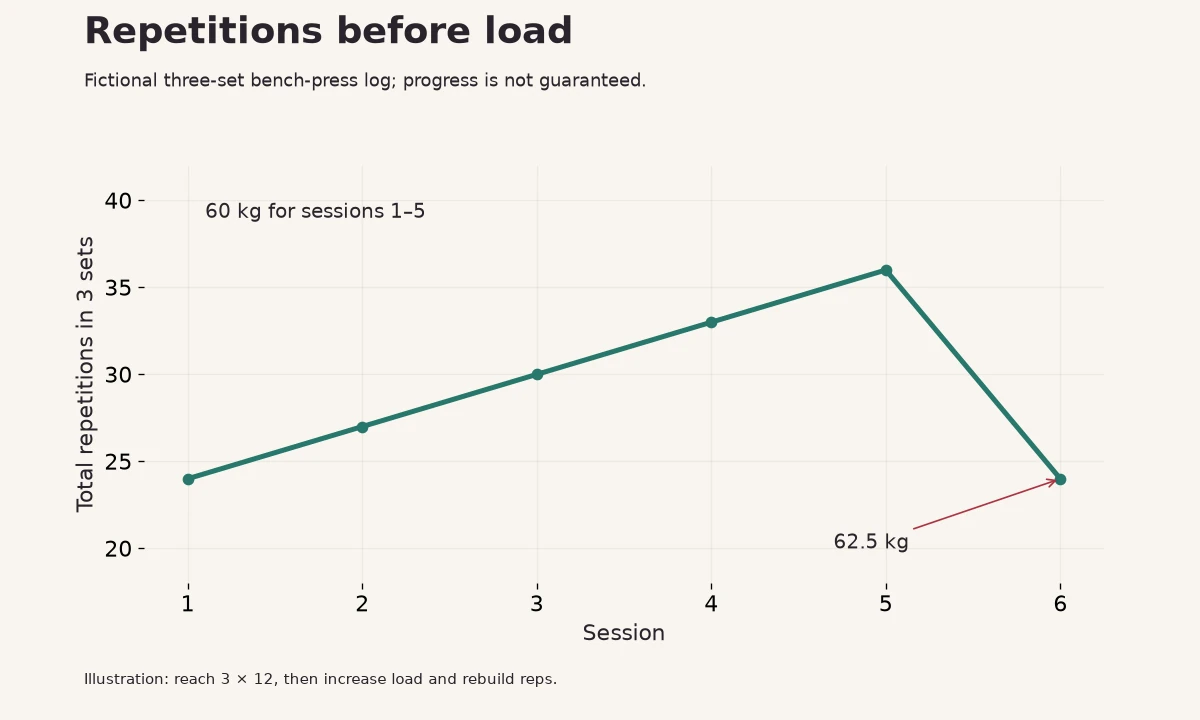
In a gym using pounds, you might make a 5 lb increase instead. Plates and dumbbell jumps differ; use the equipment actually available. The exact kilogram and pound examples are rounded alternatives, not interchangeable precision measurements.
How big should a weight increase be?
ACSM’s older 2009 progression guidance described increases of roughly 2–10% when the current load permits more repetitions than intended. That is a broad framework rather than a command to take the biggest jump. A 2.5 kg increase from 60 kg is about 4.2%; a 5 lb increase from 135 lb is about 3.7%.
For a small muscle exercise, the next dumbbell may be a large percentage increase. You can continue improving repetitions or control instead of forcing a weight that changes the movement. Ask a coach about appropriate alternatives if your equipment makes gradual changes difficult.
More reps, more sets or more weight?
| Change | What to record | What can confuse the comparison |
|---|---|---|
| More repetitions | Reps in each set at the same load | Shorter range or more help from another person |
| More weight | Load and reps together | Comparing different machines or equipment |
| More sets | Weekly working sets and effort | Adding volume while recovery is already poor |
| Better technique | Range, tempo and control | Treating better execution as failure to progress |
When the numbers stop improving
One flat session is ordinary. Check whether you are using the same equipment, resting similarly and counting repetitions the same way. Review recent sleep, food and the size of your last load jump. Holding a load while execution improves can be useful progress.
If multiple sessions are worsening, remove unnecessary extra work and consider an easier week. Sharp or persistent pain needs assessment, not a more aggressive progression rule. Do not use soreness as proof that a session worked.
Make the log useful
Write the exercise, load, sets, reps and how much effort each set took. Keep notes short enough that you will actually record them. Review several sessions before changing the plan; the last workout alone is a noisy reference point.
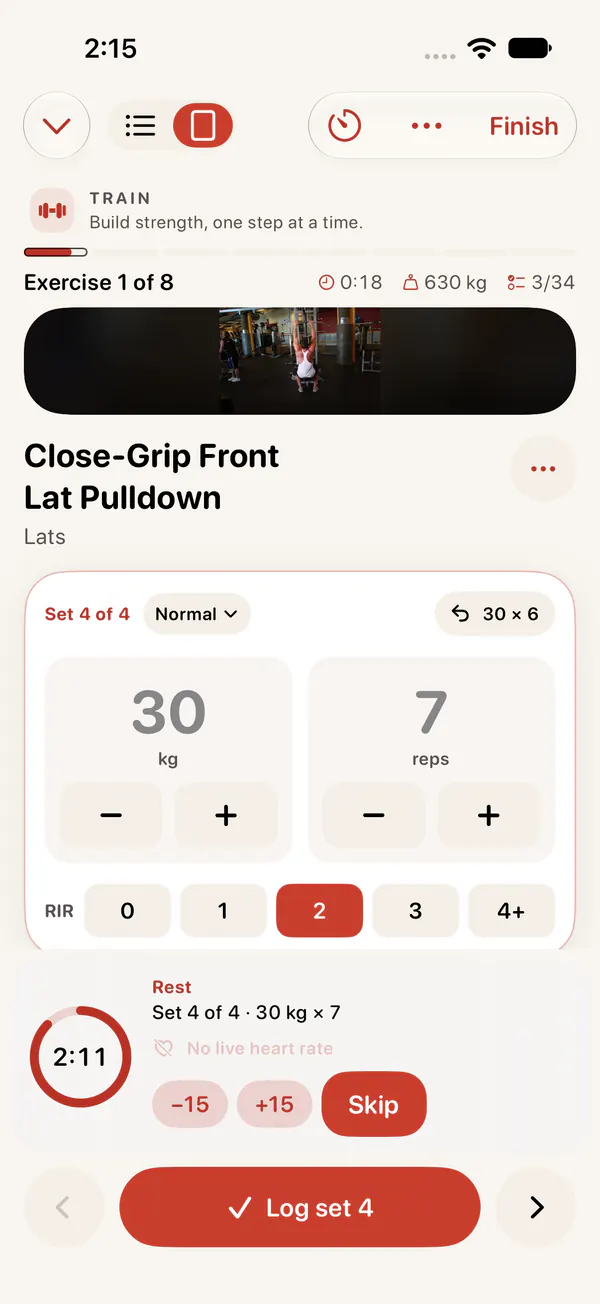
The Bodyvault workout tracker records these details and suggests progression from your history. The suggestion remains something you review against technique, symptoms and your programme. A high readiness score is not a reason to ignore a bad warm-up.
Questions
Do I have to increase the weight every workout?
No. More controlled repetitions at the same weight, or better execution, can be useful progress. A heavier weight is not automatically a better session.
Can I use progressive overload with dumbbells or bodyweight?
Yes. Record repetitions, sets and exercise difficulty consistently. Choose a change you can control rather than making every movement harder at once.
Is the bench-press table a programme to follow?
No. It is a fictional example of logging and decision-making. Choose exercise and load with your experience, goals and safety in mind.
Sources
General information about fitness and nutrition, not medical advice. If you have a health condition, are pregnant or take medication, talk to your doctor before changing your diet or training.