
Training
Deload week: how to reduce training stress and return to lifting
A deload week is a short period of easier training. You can reduce sets, load or effort to manage accumulated fatigue, then reassess before returning to harder work.

What a deload changes
A training session has several adjustable parts: how many sets you do, the weight you lift, how close you go to failure, and how often you train. An easier week can change one or several of them. It does not need to replace every familiar exercise or turn every session into a maximum-effort test.
The 2023 international Delphi study collected experienced coaches’ views on deloading. It provides a framework for practice, not proof that a fixed schedule produces better results for everyone. Newer trials are still limited. Think of a deload as a way to organize training stress, rather than a guaranteed reset or a treatment for an injury.
A sample deload week
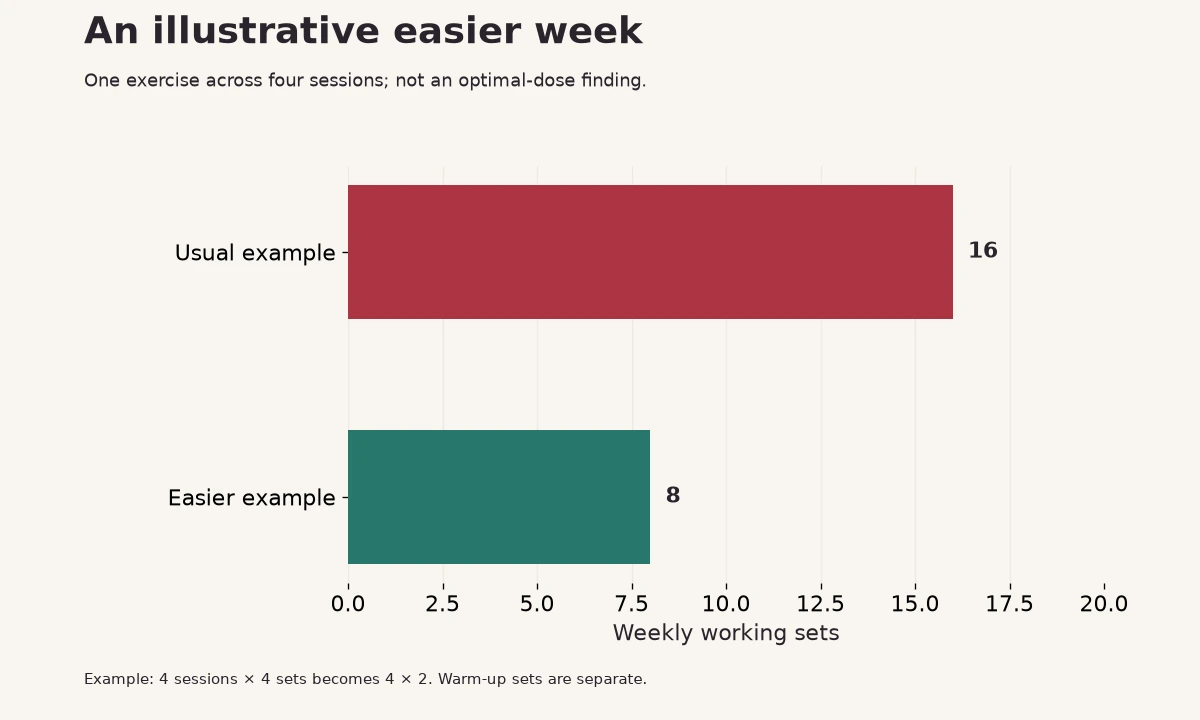
The table is an illustration for someone who normally performs four working sets per exercise. The lighter sessions stay familiar; warm-up sets are separate. Choose loads you can control and stop well before failure.
| Session | Usual example | Easier-week example |
|---|---|---|
| Upper body A | 4 working sets per selected exercise | 2 working sets; comfortable load and several reps left |
| Lower body A | 4 working sets per selected exercise | 2 working sets; no heavy testing |
| Upper body B | 4 working sets per selected exercise | 2 working sets; repeat familiar movements |
| Lower body B | 4 working sets per selected exercise | 2 working sets; reassess soreness and technique |
A beginner doing a modest, manageable routine may not need this structure. Someone preparing for a competition needs a sport-specific plan; a taper aimed at competition performance is a different decision from a general easier week.
When to consider an easier week
Look at several sessions together. If familiar loads feel harder, technique is worsening, and soreness or motivation is not recovering between sessions, check the whole picture. Sleep, food, illness, work stress and a sudden increase in training can all matter. One disappointing session does not prove overtraining.
Record what changed before deciding what to reduce. If you added exercises, extra sessions and harder sets at once, returning to the previous manageable routine may be more useful than trying to compensate with a complicated deload formula.
Deload or complete rest?
| Situation | Useful next step |
|---|---|
| Ordinary accumulated training fatigue | Consider a lighter week and watch how you respond |
| Travel or an unusually busy week | A simpler routine or rest can be practical |
| Pain that alters movement | Stop the provoking exercise and seek appropriate assessment |
| Fever, chest pain, fainting or unusual breathlessness | Prioritize medical assessment over a workout plan or wearable score |
Rest is a valid choice. Continuing painful movements at a lighter weight is not automatically safe. A readiness score cannot determine the cause of pain, rule out illness or clear you to train.
How to return after a deload
Begin with a familiar session you can perform well. Compare effort and technique with your previous logs before restoring extra sets or heavier loads. Avoid adding back every training variable at once. If the same problems return immediately, review the underlying plan with a qualified coach instead of repeatedly alternating overload and rescue weeks.
For a practical progression example, read progressive overload. It shows how repetitions and load can increase in stages without requiring a personal record every day.
Track the change in Bodyvault
The workout tracker keeps the sets, reps and effort notes you need to compare sessions. Its plans include easier weeks, but your symptoms, available time and actual performance still matter. Readiness supplies context; it does not replace those decisions.
Questions
Do I need a deload every four weeks?
No fixed interval is right for everyone. Review your workload, recovery and goals; a manageable beginner routine may need fewer planned changes.
Should I stop lifting entirely?
A deload can mean easier lifting, while complete rest can also be appropriate. Pain or illness needs its own assessment.
Will one easier week erase my progress?
An easier week is a small part of a longer programme. Its purpose is to manage training stress; it does not guarantee improved results or erase the need for consistent training.
Sources
General information about fitness and nutrition, not medical advice. If you have a health condition, are pregnant or take medication, talk to your doctor before changing your diet or training.