
Food and protein
Calories in roti, chapati and paratha: a table for every kind
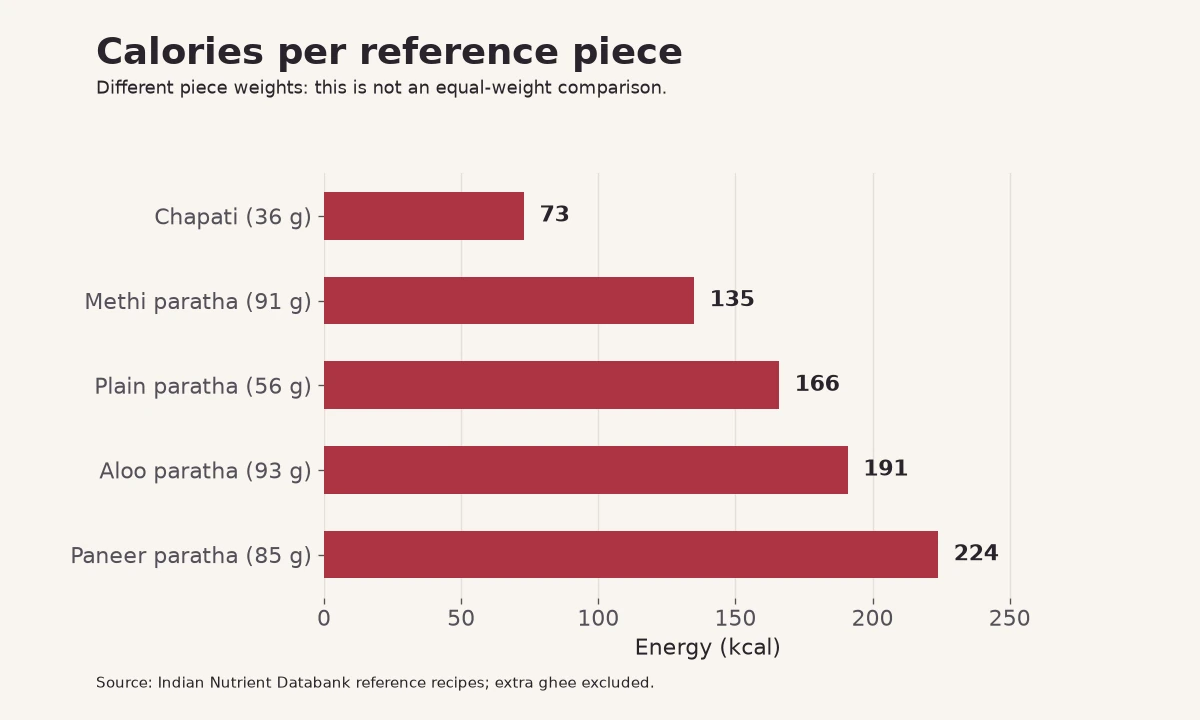
One medium chapati of about 36 g has about 73 kcal, 2 g of protein and 13 g of carbohydrate, according to the Indian Nutrient Databank. A paratha has two to three times as many calories, mostly from the oil or ghee.
Calories per piece
From the Indian Nutrient Databank (INDB), using its standard weight for one piece:
| One piece | Weight | Calories | Protein | Carbs | Fat |
|---|---|---|---|---|---|
| Chapati / roti | 36 g | 73 kcal | 2.1 g | 12.8 g | 1.3 g |
| Plain paratha | 56 g | 166 kcal | 2.8 g | 17.1 g | 9.4 g |
| Methi paratha | 91 g | 135 kcal | 3.9 g | 20.2 g | 3.9 g |
| Gobhi paratha | 102 g | 181 kcal | 3.8 g | 19.2 g | 9.7 g |
| Aloo paratha | 93 g | 191 kcal | 3.5 g | 22.3 g | 9.5 g |
| Dal paratha | 77 g | 206 kcal | 5.2 g | 23.0 g | 10.0 g |
| Paneer paratha | 85 g | 224 kcal | 6.8 g | 20.7 g | 12.4 g |
| Methi thepla | 36 g | 126 kcal | 3.3 g | 15.0 g | 5.8 g |
| Makki ki roti | 85 g | 224 kcal | 3.0 g | 20.6 g | 14.3 g |
| Naan | 53 g | 152 kcal | 4.3 g | 27.6 g | 2.7 g |
Per 100 g, chapati has 202 kcal, 5.9 g protein, 35.6 g carbohydrate, 3.6 g fat and 6.3 g fibre.
Roti, chapati and paratha: what the names mean
Roti is a broad name for flatbread; chapati commonly means a plain whole-wheat flatbread cooked on a hot pan. Paratha is usually layered or stuffed and cooked with fat. Names and recipes differ between families, countries and restaurants.
For readers outside South Asia, one katori means a small bowl. In this guide we use 150 g for the rice or dal example, not a universal bowl size. One ounce is about 28.35 g, so the 36 g chapati reference is about 1.3 oz.
Your roti isn’t the table’s roti
Rotis vary a lot from kitchen to kitchen. The two things that change the calories most:
- Size. A large roti of 50 g has about 100 kcal; a small phulka of 25 g about 50. If you count calories closely, weigh a few of your usual rotis once and use that weight.
- Ghee or butter on top. Ghee is 900 kcal per 100 g, so a 5 g teaspoon adds about 45 kcal. A buttered roti can have half as many calories again as a plain one.
Roti or rice?
Gram for gram, chapati has more calories than boiled rice (202 against 117 kcal per 100 g in INDB), because rice holds more water. Per usual portion they’re close: two medium chapatis have about 146 kcal and a 150 g katori of boiled rice about 176 kcal. Chapati made from whole-wheat atta has more fibre, which helps you feel full.
How to calculate calories in your own chapati
For this INDB chapati recipe, multiply the cooked weight in grams by 2.023 to estimate calories. A 50 g piece is about 101 kcal; 75 g is about 152 kcal. This method only works if the recipe is similar to the reference.
| Cooked chapati weight | Estimated calories | Estimated protein |
|---|---|---|
| 25 g / 0.9 oz | 51 kcal | 1.5 g |
| 36 g / 1.3 oz | 73 kcal | 2.1 g |
| 50 g / 1.8 oz | 101 kcal | 2.9 g |
| 75 g / 2.6 oz | 152 kcal | 4.4 g |
For homemade rotis, a more useful approach is to total the flour and added fat for the whole batch, then divide by the number of similar-sized pieces. Cooking changes water and weight; it does not make the flour’s energy disappear. For supermarket wraps or frozen parathas, use the package label instead.
Building a meal around roti
Two rotis give about 4 g of protein. To make the meal filling and protein-rich, add a katori of dal or rajma, a portion of paneer, curd, egg or chicken, and a vegetable sabzi. See how much protein is in paneer.
Logging it
In Bodyvault, type “2 roti, dal and bhindi” and it becomes three foods with Indian portions you can adjust. Chapati, every paratha in the table above and thepla are in the food database from INDB.
Questions
How many calories are in 1 roti?
About 73 kcal for a medium 36 g chapati without ghee (INDB). A small phulka is closer to 50 kcal and a large roti closer to 100 kcal.
How many calories are in 2 chapatis?
About 146 kcal for two medium chapatis without ghee, with about 4 g of protein.
How many calories does ghee add to a roti?
A teaspoon of ghee (about 5 g) adds about 45 kcal.
Which paratha has the fewest calories?
In the Indian Nutrient Databank, methi paratha has the fewest per piece (about 135 kcal), and paneer paratha and makki ki roti the most (about 224 kcal). How much oil you use matters more than the filling.
Are roti and chapati calories the same?
They can be when the recipe and weight are the same. The name alone does not fix the size, flour or added fat. This guide uses INDB’s Chapati/Roti entry, ASC096.
Can I use tortilla calories for roti?
Use the label or recipe for the bread you eat. Tortillas and rotis can differ in flour, fat and size, so a tortilla entry is not an exact substitute.
Sources
General information about fitness and nutrition, not medical advice. If you have a health condition, are pregnant or take medication, talk to your doctor before changing your diet or training.